Digital Media, Culture, and Communication (DMC2)
Bachelor's degree programme


Few things change as rapidly as the world of digital media and communication. Algorithms determine which messages reach us. We use apps to monitor our fitness and learn languages with the help of digital tools. If you want to convey powerful messages, call people to action, and promote products, you need digital media. Study the English-language Bachelor’s programme in Digital Media, Culture, and Communication (DMC2) and become a globally deployable all-rounder!
Programme type: Bachelor's degree programme
Duration:
Bachelor of Arts (BA)
General university entrance qualification, knowledge of English B2
No
English
Programme director
E-mail: dmc2 [at] aau [dot] at
Student Guidance Service
E-mail: studieninfo [at] aau [dot] at
To ensure you are well equipped for everything that lies ahead in this exciting and inspiring industry, you need a strong foundation. You will get this with the scientific and theoretical basis of this degree programme.
You will gain a practical understanding of how digital media work. We will help you understand the underlying logic of platforms such as Instagram, TikTok and YouTube and how they operate. Together, we will investigate how key topics such as sustainability or health can lead to success in the competition for attention.
You will discover how companies and NGOs can leverage the advantages of digital media using strategic communication: by spreading content virally and using networks to amplify their messages. We all leave data trails when we navigate the digital space. This means that we increasingly need experts to interpret and analyse this data. Here, you will gain the skills you need.
Together, we ask ourselves: What is the significance of these digital forms of communication for the development of our society? And are things good as they are, for you and for us as a community and a democracy?

You do not have to go through a special admission procedure to start the Bachelor‘s degree in Digital Media, Culture, and Communication (DMC2) in Klagenfurt. Simply enrol and dive right in!
Admission to the degree programme must take place before the end of the general admission period (winter semester: 5 September | summer semester: 5 February).
A late admission until 31 October (winter semester) or 31 March (summer semester) can only be granted in exceptional circumstances.
To start the Bachelor’s degree programme in Digital Media, Culture, and Communication (DMC2) in Klagenfurt, you have to meet the following conditions:
Prospective students whose first language is not the language in which the course is taught must provide evidence of language proficiency at the required level (CEFR).
General admission period for Bachelor’s degree programmes:
6 July 2026 – 5 September 2026
General admission period for Bachelor’s degree programmes:
8 January 2027 – 5 February 2027
Our student Mira has the answer to your question!
You can tailor your Bachelor’s programme in Digital Media, Culture, and Communication (DMC2) to your professional goals and needs.
The DMC2 Bachelor’s degree programme is a Bachelor’s combination programme. This means, as a student of DMC2, you combine your major subject worth 120 ECTS credits with a minor subject worth 60ECTS credits or two minor subjects worth 30 ECTS credits each. Just like a traditional Bachelor’s degree programme, your Bachelor’s combination programme will therefore comprise 180 ECTS credits in total.
So, after completing your Bachelor’s combination programme, you will have even more opportunities to pursue a Master’s degree at the University of Klagenfurt or at other universities.
The MAJOR (120 ECTS credits) introduces you to many of the most important topics in digital media and communication – from scientific methods and their applications to topics such as datafication, sustainability communication, online activism, and artificial intelligence.
The MINORS (60 ECTS credits in total) allow you to define your preferred specialisation. This gives you access to a wide range of Master’s programmes once you have completed your Bachelor’s degree.
Programme structure: a tabular overview
| Subject | Designation | ECTS credits |
| Basic track | Introduction to DMC2 | 16 |
| Methods & Data Analysis I | 8 | |
| Media, AI & Digital Transformations | 12 | |
| Digital Media & Communication Practice | 8 | |
| Advanced track | Theory & Research Practice in Digital Media | 14 |
| Methods & Data Analysis II | 8 | |
| Datafication | 12 | |
| Thematic tracks | You have to choose two tracks (18 ECTS credits each):
| 36 |
| Bachelor’s thesis incl. seminar | 6 | |
| Minors | You have to choose
| |
| Total | 120 |
Introductory and orientation period (STEOP)
The introductory and orientation period (STEOP) grants an overview of the key elements of the degree programme and of the course of studies ahead. Thus, it provides a factual basis for your personal evaluation of the choice of degree programme.
As students must successfully complete the introductory and orientation period in order to continue their studies, it is recommended that the introductory and orientation period should be scheduled during the first semester. The introductory and orientation period accounts for 8 ECTS credits and includes the courses DMC²@AAU and Introduction to DMC²: Key Theories and Approaches. Prior to completing the STEOP, additional courses worth up to 22 ECTS credits may be taken.
Recommended course of study
The recommended course of study outlined below shows you an exemplary list of the courses you should attend in the first two semesters in order to create a good knowledge base and take the necessary examinations if you want to complete your studies within the minimum period of study. Certain courses are only offered once per academic year, but examinations can be taken on specific dates throughout the year. Some courses are offered in parallel at different time slots during the week so that there are enough places for all students – decide on a course here and register for it.
In the appendix to your curriculum (PDF), you will find a detailed version of the non-binding recommended course of study that goes beyond the first two semesters.
1st Semester (winter semester)
| DESIGNATION | SUBJECT | ECTS CREDITS | COURSE TITLE | TYPE OF COURSE |
| INTRODUCTION TO DMC2 | Pflichtfach 1 | 2 | DMC2@AAU (StEOP*) | KS |
| Required subject 1 | 6 | Introduction to DMC2: Key theories and approaches (StEOP*) | VO | |
| Required subject 1 | 4 | Scientific Work: Basics | KS | |
| METHODS & DATA ANALYSIS I | Required subject 2 | 4 | Introduction to qualitative methods | VI |
| Required subject 2 | 4 | Introduction to quantitative methods | VI | |
| MEDIA, AI & DIGITAL TRANSFORMATIONS | Required subject 3 | 4 | Current issues on Media, AI and Digital Transformations | VO/VI |
| DIGITAL MEDIA & COMMUNICATION PRACTICE | Required subject 4 | 4 | Digital Media & Communication Practice I | KS |
| Total | 28 |
*StEOP = (Introductory and orientation period)
2nd semester (summer semester)
| DESIGNATION | SUBJECT | ECTS CREDITS | COURSE TITLE | TYPE OF COURSE |
| INTRODUCTION TO DMC2 | Required subject 1 | 4 | Thematic Track Preview | VO |
| MEDIA, AI & DIGITAL TRANSFORMATIONS | Required subject 3 | 4 | Ethical issues in Media, AI and Digital Transformations | VO/VI |
| Required subject 3 | 4 | Gender & Diversity Issues in Media, AI, & Digital Transformations | VO/VI | |
| DIGITAL MEDIA & COMMUNICATION PRACTICE | Required subject 4 | 4 | Digital Media & Communication Practice II | KS |
| THEORY & RESEARCH PRACTICE IN DIGITAL MEDIA | Required subject 5 | 4 | Theory of Science and Scientific Practice | VI |
| Required subject 5 | 4 | Research Practice in Digital Media I | PS | |
| METHODS & DATA ANALYSIS II | Required subject 6 | 4 | Digital methods I | VI |
| Total | 28 |
This is a translation of the official German document. This document is provided for informational purposes only and is not legally binding!
You can customise your Bachelor’s programme by selecting a minor worth 60 ECTS credits or two minor subjects worth 30 ECTS each, allowing you to tailor your studies to your personal interests and career goals.
Choose the combination that best suits your interests from the fields of culture, languages, technology, economics & management, law or society.
Available from winter semester 2026/27
Available from winter semester 2026/27
Available for selection from summer semester 2026
Available from winter semester 2026/27
Available from winter semester 2026/27
Available from winter semester 2026/27
Available for selection from summer semester 2026
Available from winter semester 2026/27
Available for selection from summer semester 2026
Available from winter semester 2026/27
Available for selection from summer semester 2026
Available from winter semester 2026/27
Available for selection from summer semester 2026
Available from winter semester 2026/27
Available from winter semester 2026/27
Available for selection from summer semester 2026
Available from winter semester 2026/27
Available for selection from summer semester 2026
Available from winter semester 2026/27
For detailed information on the language of instruction and possible combinations of individual minors, please refer to the individual minor pages.
EN = conducted in English | DE or EN = conducted in German or English
Information on the minors available from winter semester 2026/27 will be published shortly.
As of February 2026. Subject to change.
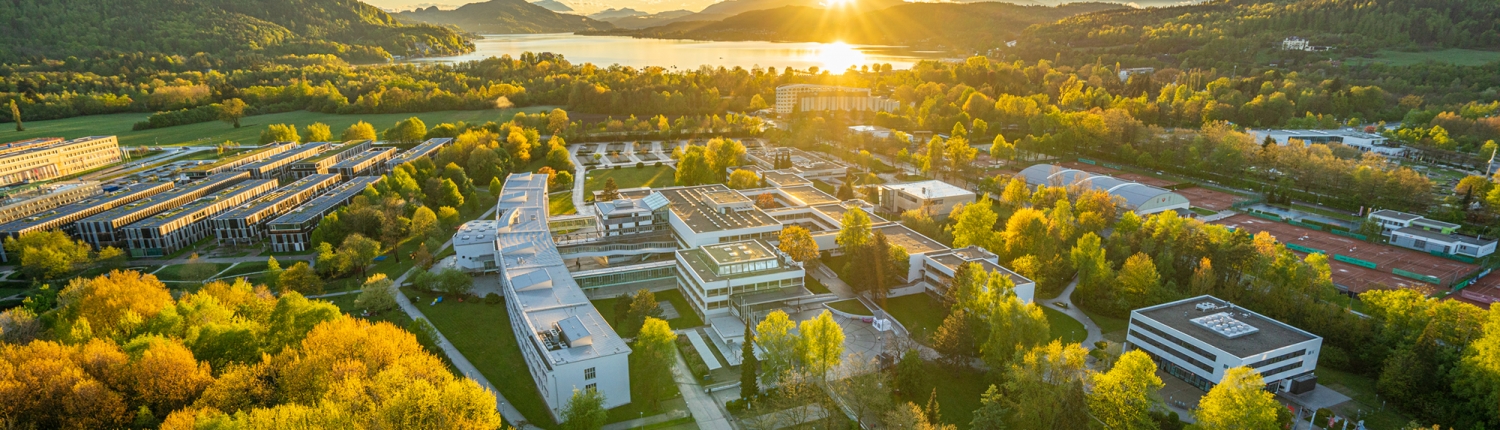
After completing the Bachelor’s degree programme in Digital Media, Culture, and Communication (DMC²) you will be equipped with the skills and knowledge to stay at the forefront of the rapidly evolving digital landscape, enabling you to tackle the most pressing issues and challenges shaping today’s society.
You can work in a wide range of professional fields, for example in the following areas: in journalism with a focus on digital media formats, in corporate communications, in (social media) marketing and advertising, in polling and opinion research. As a digital data specialist, there is strong demand for your skills and expertise in many different fields. Your career can take you anywhere in the world thanks to the programme‘s international focus and its emphasis on professional relevance.
You’ll soon discover this: There are many interesting facts, stories and news updates regarding this degree programme.
Once you have completed the Bachelor’s degree programme in Digital Media, Culture, and Communication (DMC2) you can continue on to the following degree programmes either directly or by completing a few supplementary courses:
Are you interested in the Bachelor’s degree programme DMC2 and in need of some personal advice with no strings attached? Our student guidance service will be happy to advise you!