

 Carina Rasse
IM-Excursion 2026
MA International Management: Short Time Study Abroad in SEE/CEE (604.630, 604.631, 26S)
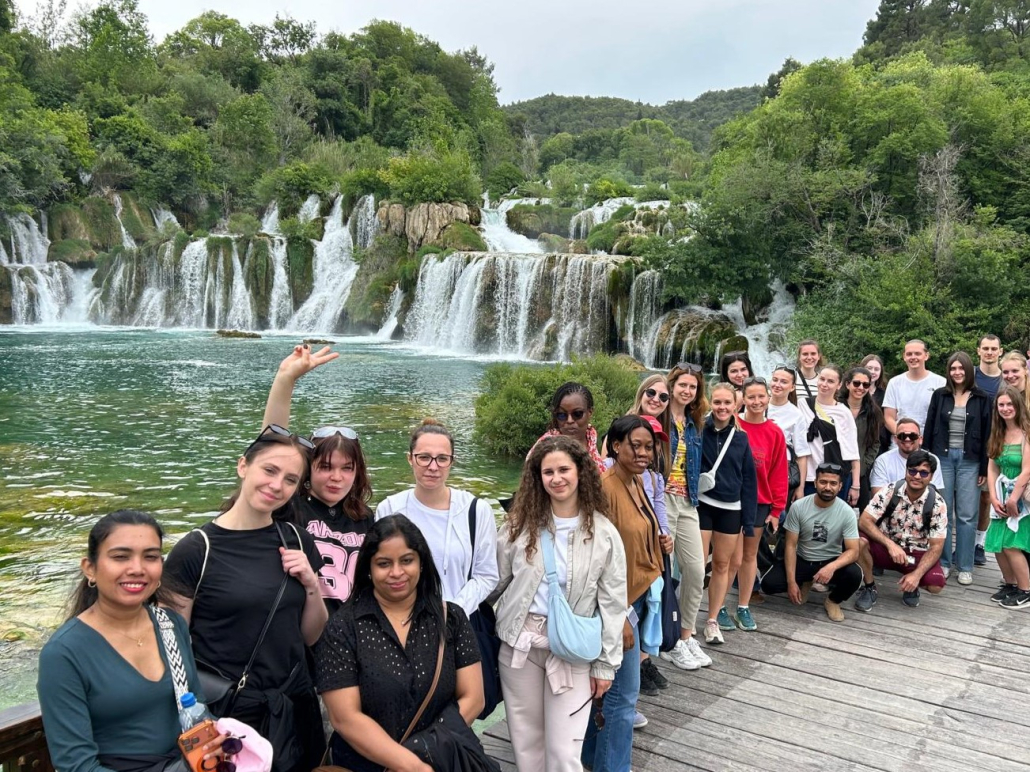
Students in the International Management Master’s program (course: Short-Term Study Abroad in SEE/CEE, 604.630/604.631, 26S) had the opportunity this summer semester to gain economic, academic, and cultural insights into Southeast Europe and to integrate these with their existing knowledge. The week-long excursion, led by Univ.-Ass. Katrin Lisa Lingenhel and Dr. Carina Rasse, took them to Zadar, Split, and Zagreb.
The focus was on engaging lectures and discussion sessions at the long-standing partner universities—the University of Zadar, the University of Split, and the University of Zagreb. Building on the core areas of the Master’s program, students deepened their understanding of current economic and social issues while gaining insights into the cultural significance of the regions. Topics covered included strategic university goals and ongoing projects, as well as subjects such as destination management using a local case study, the deep-tech innovation ecosystem, translation research, and the use of artificial intelligence (AI) to develop resilient food supply chains.
In addition, visits to companies with diverse business models and across various industries provided valuable practical insights. Particularly impressive was the visit to the largest marina on the Adriatic coast, Marina Dalmacija in Sukošan. The students gained comprehensive insights into the marina’s various departments and its local and international integration. Another highlight was the visit to the family-owned company Stella Croatica, which focuses on sustainability and the combination of tradition and modern trends. Equally enriching was the exchange with the internationally active company Kaufland Hrvatska k.d., which offered exciting insights into the synergies, departments, and IT systems of an internationally networked retail enterprise.
The excursion was rounded off by a diverse cultural program that included visits to Krka National Park and Klis Fortress, as well as guided city tours. These activities fostered a deeper understanding of the regional history, culture, and identity of Southeast Europe.
We would like to extend our sincere thanks to our partner universities and the participating companies for their commitment and for providing our students with such diverse and practical insights.