




Student Cockpit

  • ePayment
  • Appointment & course management

Campus System

  • Research Information System
  • Campus search

Staff Portal

  • Organisation handbook
  • Operational messages, internal & personal messages

Links

  • Webmail
  • Library
  • Vacancies
  • University bulletin
  • Bulletin Board
  • Staff Search
  • Campus Map
  • IT Services (ZID)
  • eLearning Service
  • USI
  • OEH Klagenfurt

Information for

  • Pupils
  • Alumni & Career
  • Prospective Students
  • Continuing Education
  • Researchers
  • Students
  • Staff
  • Teaching Staff
  • Partners & Sponsors
  • International
Gütesiegel evalagZertifikat 2024: Vielfalt gestalten. Diversity Audit des StifterverbandsGütesiegel Betriebliche GesundheitsförderungSatisfaction Award 2023Satisfaction Award 2021EMAS SiegelGütezeichen hochschuleundfamilie Gütezeichen EqualitaThe Faculty of Management, Economics & Law at the University of Klagenfurt has been accredited by AACSB International.
Deutsch
search
Quicklinks +
  • English English English en
  • Deutsch Deutsch German de
  • Link to Instagram
  • Link to Facebook
  • Link to TikTok
  • Link to Youtube
  • Link to LinkedIn
University of Klagenfurt
  • Home
  • University
        • Organisation
          • Management
          • Academic affairs and organisation
          • Faculties, departments and faculty centres
          • University centres
          • University Executive support offices
          • Administration and management
          • Representations and commissioners
          • Organisational plan
          • Statute
        • Profile
          • Strategy
          • Mission statement
          • University history
          • Roll of honour
          • Health Management
          • Gender and equality
          • The Carinthian University Conference
          • Alps-Adriatic Rectors‘ Conference
        • Campus
          • On Campus
          • 22nd Century Center (22CC)
          • Art and Culture
          • Accommodation
          • Catering
          • Sports and leisure
          • Green campus
          • Car parks and parking regulations
          • More light, air, and openness
        • Service & Contact
          • Vacancies
          • University bulletin
          • Partners & Sponsors
          • Press Room
          • Family services
          • Services for disabled students
          • University library
  • Research
        • Research profile
          • Grants & Winners
          • Main research areas
          • Sustainable Development Goals
          • Research infrastructure
          • Karl Popper Kolleg
          • Ada Lovelace Programme
          • Open Access
          • Knowledge transfer
          • Institutional partnerships
        • Early Career
          • Thematic Doctoral Programmes
          • Young scientists mentoring
          • Doc.Service
          • Continuing education programme for early carrer researchers
        • Research support
          • Research Council
          • Research Support Service
          • Research funding
          • Research Information System (FoDok)
          • Institutional Review Board for Research Ethics
          • Good academic practice
          • Science communication
  • Study
        • Courses offered
          • List of degree programmes
          • Bachelor’s Combination Programmes
          • Extension programmes
          • Specialist courses & optional subjects
          • Continuing education programmes
          • Doctoral Degree Programme
          • Degree Programmes in English
        • Studying at AAU
          • Term dates and deadlines
          • New starter checklist
          • University fees
          • Applying to study
          • Starting your programme
          • During your programme
          • Completing your programme
          • Search for courses
        • Student Life
          • DISCOVER Klagenfurt
          • Scholarships & grants
          • Offices and services
          • Campus
          • Accommodation
          • Catering
          • Accessibility
          • Sport & leisure
          • Work & study
          • Family & study
        • Study abroad
          • Study in Klagenfurt
          • Study abroad
          • Summer schools
          • Support & advice
        • Support & Information
          • Admissions and Examinations Office
          • Office of Academic Affairs
          • Student Guidance Service
          • Servicepoint Tutoring & Mentoring
          • Union of Students (ÖH)
          • International Office
          • Doc.Service
          • Student Ombudsman
          • Alumni & careers
          • University library
          • Writing Centre
  • International
        • International Profile
          • Courses offered in English
          • Partner universities
        • Study abroad
          • Erasmus+ student mobility
          • Joint-Study
          • Joint and double degrees
          • Short-term research placements abroad
          • Summer schools
          • Further outgoing grants
          • FAQ for outgoing students
        • Work and research abroad
          • Lecturers
          • Young researchers
          • General staff
          • Erasmus+ student internships
          • Subject-specific international placements
          • Teaching German abroad
        • Study in Klagenfurt
          • Students in mobility programmes
          • Entry & Residence (VISA)
          • MORE programme for refugees
          • Support for students from the Ukraine
        • Information & advice
          • International Office
          • Welcome Center for international students
          • Admissions and Examinations Office
          • Language Centre German in Austria
          • Student Union Section for International Students
          • Language certificates
          • Writing Counselling
  • Sharing Knowledge
        • Partnership Opportunities
          • Partners & Sponsors
          • inspire! Lab
          • Research Infrastructure
          • Commissioned Research
          • Endowed Professorships
          • Alumni & Career
        • Existing Collaborations
        • Start-ups & Patents
          • vor.GRÜNDEN
          • Build!
        • University & Society
          • Working for a Better Life
          • Long Night of Research
          • University for Children
          • Newsletter Neues Wissen
          • UNIKUM
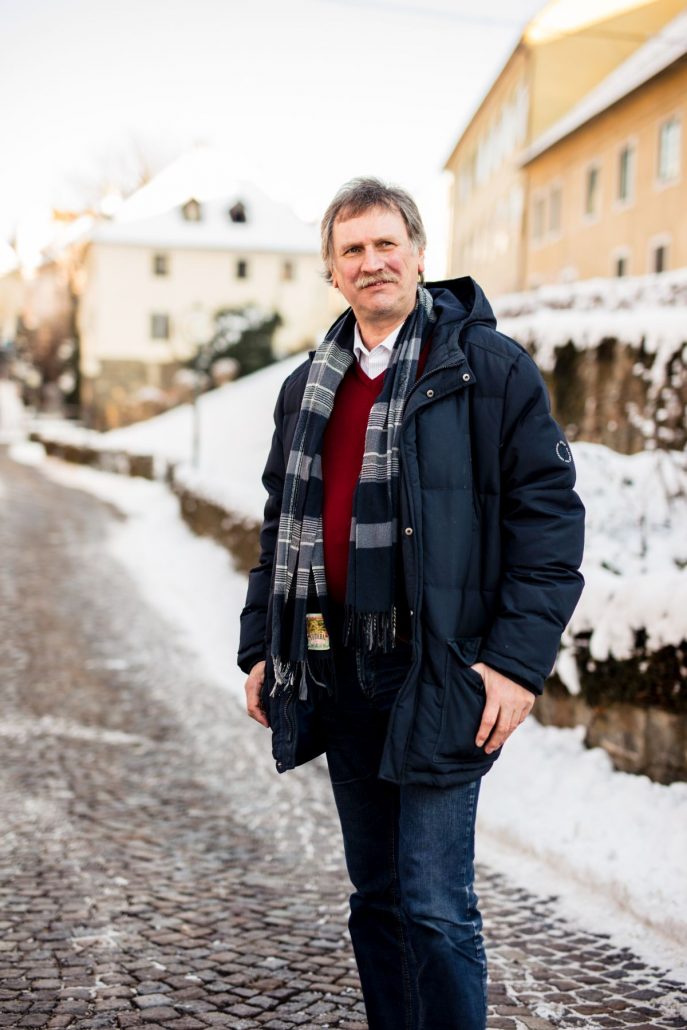
Bögenhold Dieter | Foto: aau/Waschnigaau/Waschnig

The flip side of self-employment

13 March 2017

The sociologist Dieter Bögenhold is advocating a critical discourse on the functions and effects of self-employment on national economies. After all, not all that glistens is gold when it comes to labour market statistics.

What makes an entrepreneur?
Entrepreneurship is extremely heterogeneous. From social, economic and biographical perspectives, it includes a variety of different situations and careers. But the one thing entrepreneurs have in common is that they are not dependent on a salary or wage. It also follows that entrepreneurs have a lot in common with the self-employed. The spectrum is extremely wide, ranging from a fast-food stand owner to Didi Mateschitz, the Austrian billionaire co-founder of Red Bull.

But is it always clear who is an entrepreneur?
All the statistics show a divide between employment and self-employment. But what is considered less often is the mobility between the two spheres. Furthermore, there are situations in which individuals can be both employed and self-employed. In one study, with Andrea Klinglmair, we labelled this phenomenon ‘hybridity’. And we want to continue to work in this area.

What role does a person’s occupational group play here?
In 2011, along with two Finnish colleagues, I spent some time looking at the labour market behaviours of freelance journalists, interpreters and artists. These three groups showed differing rationalities. The journalists were predominantly self-employed because they didn’t have jobs. As soon as they had the chance to become employed they took it. With artists it was the exact opposite: they habitually tended towards autonomy. Even when they found it hard to make ends meet financially due to being self-employed, they didn’t want to take on just any old job. The line between self-employment and being gainfully employed is not as rigid as the statistics would suggest. It is fragile and characterised by transitions from one sphere into the other. These phenomena have not been subject to much analysis to date.

Alongside hybrid constellations there are also the ‘part-time self-employed’. What do you think about this phenomenon?
There are also only limited statistics on the part-time self-employed. A significant number of self-employed people work part-time and are on low incomes, particularly amongst women. Viewed on their own, the incomes of many part-time self-employed individuals come close to the poverty line. However, when you view them as part of a household, self-employment frequently provides an additional household income.

What has all this got to do with the challenges of our current, changing labour markets?
The term entrepreneurship is commonly accepted as having positive connotations, even politically speaking: entrepreneurs generate innovations, jobs and growth. Entrepreneurs are seen as heroes, advancing society and setting positive economic trends. But this can also be viewed differently: many phenomena, when looked at more closely, show what we have long called the ‘Americanisation of the labour market’: People don’t just have one or two jobs; instead they cobble together a living from a wide variety of activities.

Can you back this critical perspective up with figures?
The dark side of entrepreneurship is visible in the figures: more than 70 percent of entrepreneurs in the EU-28 are one-person companies. In Austria and Germany, the figures are comparably low at under 60 percent. In the UK, however, almost 85 percent of all entrepreneurs are OPCs, or one-person companies.

Are shifts in society and at work changing the perspective of the term ‘entrepreneurship’?
All in all, digitalisation has brought about wide-reaching, radical changes in society – similar to the effect of the industrial revolution in the 19th century – and will eventually lead to the extinction of entire professions. At the same time, new areas of activity are being developed. The connections between our digitalised society and the economy have become increasingly complex. When you enter working life as a young person today, you can be relatively certain that it won’t be the job you go into retirement with. The employment of the future will rather be structured in biographical phases, and self-employed episodes could well be among these phases. And this goes hand-in-hand with an altered understanding of employment and income. On that basis, it can be assumed that a stable and relatively peaceful middle ground exists within the category of OPCs: these individuals are doing exactly what they want and are not striving to grow their business, even if they are never going to earn a fortune from being self-employed.

Are the self-employed creating more job opportunities?
No. The statistical findings show that actually the opposite could be the case. The increasing number of self-employed individuals is a response to the increasing amount of unemployment. Overall, where levels of unemployment rise, the levels of self-employment rise too. What is often sold as a cure for the disease of unemployment is actually not a cure at all, but rather a symptom. It isn’t possible to conceive it simply in terms of ‘good’ or ‘bad’, that would be an oversimplification.

How important is it then to have a differentiated perspective on entrepreneurship?
This is where science comes into its own, as otherwise we would remain stuck looking at the level of political discourse, which generally takes the line that the more entrepreneurs a national economy has the better. Self-employed individuals create a job for themselves and pay tax. If they are successful, there is a multiplier effect and unemployment levels sink further. The more self-employment is promoted, the more unemployment fall and the greater the economic growth. The problem is that, empirically speaking, this reasoning doesn’t always add up.

In international terms, the start-up friendly USA can serve as a model.
The OECD data from 2015 shows that America has the lowest levels of self-employment of any country; lower even than Russia. Higher levels of self-employment are typically seen in countries with lower economic growth and higher levels of structural problems within the labour market; for example in Greece or Turkey. It can therefore be assumed that a sound economic structure, which provides enough jobs, is the basis for growth, and not the other way round. But then questions about such causal connections are admittedly seldom asked.

for ad astra: Annegret Landes

About the person

Dieter Bögenhold has been a full Professor within the Department of Sociology since 2011. He works at the interface between economic and social research. His areas of expertise are research into start-ups and entrepreneurial behaviour and consumer research/the sociology of consumption, as well as innovation research and the history of sociology and economic thinking.

Bögenhold Dieter | Foto: aau/Waschnig


Kategorien:
AAU News Department of Sociologyad astra 1/2017News Faculty W&R


Tags:
economics 1/2017
Share this entry
  • Share on Facebook
  • Share on WhatsApp
  • Share on Pinterest
  • Share on LinkedIn
  • Share on Reddit
  • Share by Mail
https://www.aau.at/wp-content/uploads/2017/03/37-Bögenhold_Foto-Waschnig.jpg 1800 1200 Forschungskommunikation https://www.aau.at/wp-content/uploads/2015/09/aau-logo-300x110-300x110without-background3.png Forschungskommunikation2017-03-13 09:00:142017-09-04 16:08:53The flip side of self-employment
Fakultät für Wirtschaftswissenschaften
Zurück

Quicklinks

  • Webmail
  • University bulletin
  • Library
  • Bulletin Board
  • Staff Search
  • Campus Map
  • IT Services (ZID)
  • USI
  • OEH Klagenfurt
  • Index A-Z

Portals

  • Campus System
  • Student Cockpit
  • Staff Portal
  • Moodle
  • Facebook
  • Bluesky
  • LinkedIn
  • Youtube
  • Instagram
  • TikTok
Siegel der Alpen-Adria-Universität Klagenfurt

Information for

  • Pupils
  • Alumni & Career
  • Prospective Students
  • Continuing Education
  • Researchers
  • Students
  • Staff
  • Teaching Staff
  • Partners & Sponsors
  • International

Address

University of Klagenfurt
Universitätsstraße 65-67
9020 Klagenfurt am Wörthersee
Austria

+43 463 2700
uni [at] aau [dot] at
www.aau.at
Campus Plan

Gütesiegel evalagZertifikat 2024: Vielfalt gestalten. Diversity Audit des StifterverbandsGütesiegel Betriebliche GesundheitsförderungEMAS SiegelSatisfaction Award 2023Satisfaction Award 2021Gütezeichen hochschuleundfamilieGütezeichen EqualitaAACSB accredited

© University of Klagenfurt
  • Legal notice
  • Privacy policy
  • Responsible disclosure
  • Whistleblowing
  • Accessibility
  • Web team
  • Cookie settings

Your privacy is important to us!


This website uses cookies to ensure the basic functionality of our website. We also use Cookies cookies to optimally redesign our website and to improve it continuously for you. For this purpose, it is necessary to pass on information to the respective service providers. By clicking on the "Accept all cookies" button, you agree to the use of cookies.
You can subsequently modify your preferred settings at any time under "Manage settings".
For further information on the cookies used, please refer to our privacy policy.

Manage settingsReject all cookiesAccept all cookies

Cookie and Privacy Settings


How we use cookies

We use cookies to optimally redesign our website and to improve it continuously for you.
Click on the different category headings to view further information and to change the default settings.
Please note that refusing some cookies may affect the way our website works. Web pages may not be displayed correctly and may not function properly.

Notice regarding the processing of your data collected on this website in countries without adequate data protection standards:
By clicking on ‘Accept all cookies’, you consent to the transfer of your personal data to providers in third countries (e.g. the USA) in accordance with Art. 49 (1) lit. a GDPR. These providers (e.g. Google, Facebook, LinkedIn, Twitter, YouTube) may not be subject to a level of data protection equivalent to that of the EU. The data will only be transferred with your express consent.

Essential Cookies & Cookie Notice

Essential cookies

These cookies are strictly necessary for the functioning of the website. Essential cookies enable basic functions and are necessary for the proper functioning of the website. You can set your browser to block these cookies or to notify you about these cookies. However, some parts of the website may not work as expected.
These cookies do not store any personal data.


Hiding the cookie notice

Two cookies are required for this setting to be saved. Otherwise this hint will be displayed again every time the page is loaded.

Google Tag Manager

We use tracking and analysis tools to ensure continuous optimisation and needs-based design of our website. Tracking measures also enable us to record statistics regarding the use of our website by visitors and to develop our website further on the basis of these findings.
If you do not want Google and Facebook to track your use of our website and transmit your visits, you can disable tracking in your browser here:

Other external services

We also use other external services including Google Webfonts, Google Maps, and external video providers.
Since these providers may collect personal data such as your IP address we allow you to block them here.
Please be aware that this might significantly limit the functionality and appearance of our site. Changes will take effect once you reload the page.
Google Webfont Settings:

Google Maps Settings:

Google reCaptcha Settings:

Vimeo and Youtube video embeds:

Privacy policy

For further information on the cookies used, please refer to our
Privacy Policy of the University of Klagenfurt

Save and accept selectionReject all cookiesAccept all cookies
Open Message Bar Open Message Bar Open Message Bar
Scroll to top