Geography
Bachelor's degree programme
Starting in the winter semester 2026/27, you will be able to study the Bachelor’s degree programme in Geography as a combination programme. You take Geography as your major and flexibly customize it by choosing one or two minor subjects. This allows you to shape an individual study profile, acquire various skills and prepare yourself perfectly for your professional career.
Do you want to understand what is happening in the world? The climate and our environment are changing and global events such as pandemics have revealed huge spatial disparities. The significance of data is steadily on the rise, and with it the need for people who can interpret it properly. If you are interested in gaining a comprehensive overview of the world and of its “spaces”, then you’ve come to the right place.
Study Geography and contribute to understanding and improving the world.
Bachelor of Science (BSc)
Generaluniversity entrance qualification, knowledge of German B2
No
German, some English
Student Guidance Service
E-mail: studieninfo [at] aau [dot] at
Office of the Programme Director
Website of the Programme Director
E-mail: geo [at] aau [dot] at
Website: www.aau.at/en/geography-and-regional-studies/
Student Representatives
E-mail: oeh [dot] geo [at] aau [dot] at
The only constant in our universe is change. Our natural, cultural and social spaces are constantly evolving: Urban areas have grown considerably in recent decades, while rural life seems to be gaining in attractiveness due to the ongoing health crisis Today, more often than not, we live alone, but at the same time, digital possibilities allow us to transcend borders and we can easily get together with our friends from all over the world in virtual sessions.
These changes have a reciprocal effect on each other. Our Bachelor’s degree programme in Geography teaches students to examine these developments and identify potential issues. After graduating you will be triple-qualified as follows: thinking geographically, that is, addressing social issues from a geographical perspective, doing geography, in other words, contributing new knowledge to spatial issues, and using geography as interface, and therefore working at the intersection of many different subjects.
We can teach you the basics as well as the specialist knowledge you need to solve space-related questions and problems in an independent, theory-based and method-oriented way. You will acquire the skills you need to approach problems from different angles allowing you to discover new interrelations and insights. We can provide you with the perfect mix of social, natural and cultural sciences. You are free to decide which key areas you wish to focus on!
Geography is a science that doesn’t merely take place in offices, laboratories and libraries. The programme also includes excursions and hands-on project seminars. Together we will go out into the world you seek to understand: to nature reserves, innovation centres, countries and regions that you have yet to explore. After all: By exploring new spaces, you will gain greater scope for new thoughts and ideas.
Curious what the Bachelor's degree programme in Geography is all about?
General admission period for Bachelor’s degree programmes:
6 July 2026 – 5 September 2026
General admission period for Bachelor’s degree programmes:
8 January 2027 – 5 February 2027
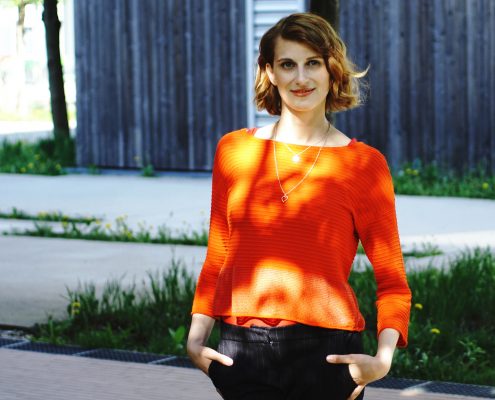
Our student Martin has the answer to your question!
This is what makes the degree programme so special
We help you to acquire scientific skills, and you can use them to good effect. The challenges facing our planet are manifold and complex. Whoever understands how individuals, society and the environment interact with each other can help contribute to a better world. Does this sound like a meaningful mission? We will equip you with the tools you need to develop creative and feasible visions in order to create something entirely new and lasting.
In Klagenfurt you can study at your own pace. To help you follow your path with confidence, we keep it clear of (bureaucratic) stumbling blocks and barriers. If you wish to reach your goal quickly and efficiently, we will always be there to support you. Our recommended course of study will guide you through the semesters. You work your way through the curriculum – making the most of opportunities to broaden your horizons and without wasting time. If you would like to know which courses await you before you start, take a look at the wide range of seminars and lectures.
Programme structure: a tabular overview
| Subject | Designation | ECTS credits |
| Required subjects | Principles of Geography | 7 |
| Human Geography | 22 | |
| Physical Geography | 22 | |
| Methods in Geography | 30 | |
| Regional Studies | 20 | |
| Specialisation in Geography | 18 | |
| Restricted electives | Choice of four subjects as specialisation:
| 40 |
| Optional Subjects | 9 | |
| Bachelor's thesis | 12 | |
| Total | 180 |
Introductory and orientation period (STEOP)
The introductory and orientation period (STEOP) grants students an overview of the key elements of the degree programme and of the course of studies ahead. Thus, it provides a factual basis for the personal evaluation of the choice of degree programme.
As students must successfully complete the introductory and orientation period in order to continue their studies, it is recommended that the introductory and orientation period should be scheduled during the first semester. The introductory and orientation period within the Bachelor's degree programme in Geography at the University of Klagenfurt comprises three courses ("Introduction to Geography", "Principles of Human Geography I" and "Principles of Physical Geography I") amounting to a total of 9 ECTS credits. Prior to completing the STEOP, additional courses worth up to 22 ECTS credits may be taken.
Recommended course of study
The recommended course of study outlined below shows you an exemplary list of the courses you should attend in the first two semesters in order to create a good knowledge base and take the necessary examinations if you want to complete your studies within the minimum period of study. Certain courses are only offered once per academic year, but examinations can be taken on specific dates throughout the year.
In the appendix to your curriculum (PDF), you will find a detailed version of the non-binding recommended course of study that goes beyond the first two semesters.
1. Semester (Starting in the winter semester)
| SUBJECT | ECTS | Course number + title | Course type |
| Grundlagen der Geographie | 3 | 320.711 Einführung in die Geographie (STEOP) (B 1.1)** | VO |
| 4 | 320.712 Wissenschaftliches Arbeiten (B 1.2) | UE* | |
| Humangeographie | 3 | 320.721 Grundlagen der Humangeographie I (STEOP) ( B2.1)** | VO |
| 4 | 320.722 Humangeographie A (B 2.2) | PS* | |
| 4 | 320.723 Humangeographie B (B 2.3) | PS* | |
| Physiogeographie | 3 | 320.731 Grundlagen der Physiogeographie I (STEOP) (B 3.1)** | VO |
| 4 | 320.732 Physiogeographie A (B 3.2) | PS* | |
| 4 | 320.733 Physiogeographie B (B 3.3) | PS* | |
| Total | 29 |
* compulsory attendance
** The STEOP-courses 320.711, 320.721 and 320.731 only take place in the winter semester.
| SUBJECT | ECTS | Course number + title | Course type |
| Methoden der Geographie | 4 | 320.741 Datenanalyse (B 4.1) | PS* |
| 2 | 320.742 Kartographie (B 4.2) | PS* | |
| Regionalstudien | 2 | 320.090 und 320.092 Zwei eintägige Exkursionen (B 5.1) | EX |
| Humangeographie | 3 | 320.724 Grundlagen der Humangeographie II (B 2.4) | VO |
| 4 | 320.725 Humangeographie C (B 2.5) | PS* | |
| 4 | 320.726 Humangeographie D (B 2.6) | PS* | |
| Physiogeographie | 3 | 320.734 Grundlagen der Physiogeographe II (B 3.4) | VO |
| 4 | 320.735 Physiogeographie C (B 3.5) | PS* | |
| 4 | 320.736 Physiogeographie D (B 3.6) | PS* | |
| Total | 30 |
* compulsory attendance
Studying abroad
Why is nature more severely affected by human activity in one location than in another? Where do structures support new developments and which regions have fewer chances to succeed within the global growth-oriented competition? In Klagenfurt you will learn to recognise problems and develop solutions. One way to experience the diversity of global “spaces” is to spend a semester abroad, while improving your language skills and intercultural competences at the same time. The world is yours to explore – and you can get started while you are still studying. For more information on international mobility during your degree programme, please refer to Section 7 of the curriculum.
This degree programme does not include a compulsory period abroad. However, we strongly encourage all students to complete part of their degree programme as a semester abroad at one of the University of Klagenfurt’s more than 250 partner universities worldwide. You need not worry about your finances – we offer plenty of scholarships. You will find everything you need to know about studying abroad on our Study Abroad page.
Internship
In the area of guided electives, you have the opportunity to complete an internship. The internship must comprise at least 240 hours; you must obtain approval from the programme director before commencing the internship. The content of the internship must be related to the Bachelor's degree programme in Geography or a desired specialisation and may also take the form of a research internship at an academic institution.
Proof of completion is provided in the form of corresponding certificates and an activity report of at least 10,000 characters (including spaces). Please refer to section 15 of the curriculum for more information.
Admission to the degree programme must take place before the end of the general admission period (winter semester: 5 September | summer semester: 5 February).
A late admission until 31 October (winter semester) or 31 March (summer semester) can only be granted in exceptional circumstances.
You do not have to go through a special admission procedure to start the Bachelor‘s degree in Geography in Klagenfurt. Simply enrol and get stuck in!
You only have to meet the following conditions, which also apply to all other programmes:
Prospective students who apply for admission to a German-language degree programme and whose first language is not German must provide evidence of German language proficiency no lower than level A2 of the Common European Framework of Reference for Languages (CEFR) at the time of application.
German courses and exams are offered as part of the VAAU preparatory course by the Language Center German in Austria.
After completing your Bachelor’s degree in Geography, you can work in a wide range of professional fields, including the following areas:
You’ll soon discover this: There are many interesting facts, stories and news updates regarding this degree programme.
We won’t abandon you, especially at the start of your studies!
Once you have completed the Bachelor's degree programme in Geography at the University of Klagenfurt, you have the option to continue your studies with one of the following degree programmes, to give just a few examples. The choice is yours:
What are the key focus areas in this degree programme?
This degree programme is for anyone who wants to understand and shape the world. The focus of this programme is on Human Geography, Physical Geography and the Methods of Geography. Topics include global urban growth, migration, mobility, displacement and spatial inequality. Typical areas of Physical Geography cover landscape development, natural risks and biological diversity. Whether we are dealing with climate change, electromobility or migration – students of Geography are concerned with virtually all of the central challenges facing society.
In order to study Geography, which interests should I have?
An interest in socio-political and environmental issues; international, intercultural open-mindedness; an interest in research and scientific work; a cosmopolitan attitude. Spending time in nature and conducting research is as much a part of Geography as dealing with people and other cultures.
What are my career prospects after this degree programme?
Your prospects are bright. You can go into urban planning, work for architecture firms, in management consultancy, real estate agencies, tourist offices or insurance companies. Moreover, civil engineering and geographical data analysis can also serve as future occupational fields.
How do I start my academic studies at the University of Klagenfurt?
Our check list will help you to get started. We have compiled everything you need to know here – from registering online right up to enrolling for a degree programme.
Who can I contact if I have questions about the content of this degree programme?
If you have any questions about the content, please contact the Programme Director by e-mail at geo [at] aau [dot] at.